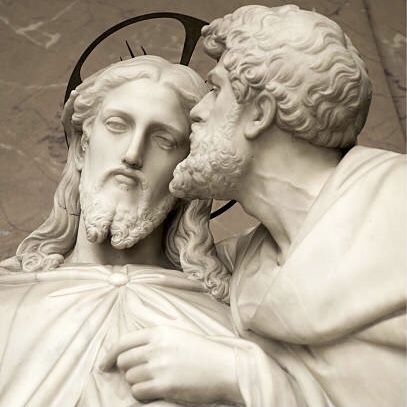
Flashback Friday – The Devoted Things

What is holding you back? We all have things we want to achieve, goals we want to reach, or areas in which we want to grow. In the Old Testament, the Israelites wanted to take possession of the long awaited land God had promised them as their inheritance. But there was something holding them back. 

Their sin. 

After wandering the wilderness for forty years due to their sin, the Israelites were finally poised to take possession of the land of Canaan. They had just miraculously taken the city of Jericho, and were gunning to take the next city of Ai. They didn’t think it would be too hard; after all, they had just witnessed a fortified city’s walls fall completely flat! So they only sent a few thousand men to go up against roughly 12,000. Nothing is impossible for the Lord! But they quickly came running with their tails tucked between their legs and thirty-six men dead! What on earth had happened?

Their leader, Joshua, fell on his face before the Lord in lament! Why wasn’t God keeping his end of the bargain?

God quickly rebuked Joshua and commanded him to rise. Why hadn’t Israel triumphed? God’s answer is point blank:

“Israel has sinned; they have transgressed my covenant that I commanded them; they have taken some of the devoted things; they have stolen and lied and put them among their own belongings. Therefore the people of Israel cannot stand before their enemies.” (Joshua 7:11-12a)

What were “the devoted things” that caused Israel to sin?

Back in Joshua chapter 6, Joshua had given the people God’s explicit instructions for how they were to capture the city of Jericho. They were also commanded to devote the entire city to destruction. They were not to keep any of the plunder for themselves. 

“But you, keep yourselves from the things devoted to destruction, lest when you have devoted them you take any of the devoted things and make the camp of Israel a thing for destruction and bring trouble upon it.” (Joshua 6:18)

Throughout the law of Moses, the Israelites were expressly warned not to make a covenant with the nations they went in to conquer but to destroy everything, lest those nations become a barb in their eye and a thorn in their side. God intended to keep his people holy, or set apart, and even one thing remaining from those wicked cultures could ensnare, defile, and distract them from worshipping God.

But a man named Achan coveted some of Jericho’s silver, gold, and clothing, took it, and buried it inside his tent. Therefore God spoke, “There are devoted things in your midst, O Israel. You cannot stand before your enemies until you take away the devoted things from among you (Joshua 7:13b).”

This reminds me of how we hang on to things we should not. How often does God say we must purge things from our lives that he has expressly forbidden, and yet we try to cling to a little piece of it?

Like Gollum and his ring, we try to hold on to things that are supposed to be devoted to destruction as if they were treasures. We foolishly think we can manage them, or compartmentalize them, or even use them for good, but in the end they will control us. As God warned Cain, “Sin is crouching at the door. Its desire is contrary to you, but you must rule over it” (Genesis 4:7b). Sin wants to have mastery over us.

We must be destroying it, or it will destroy us.

We must devote to destruction, or put to death, what is earthly in us: “sexual immorality, impurity, passion, evil desire, and covetousness, which is idolatry” (Col. 3:5). 

We must put away all “anger, wrath, malice, slander, and obscene talk from [our mouths]” (Col. 3:8).

Even a sliver of sin—a “secret” sin that no one else sees, a sinful thought we like to replay in our minds, a tiny “harmless” reminder of a sin we once enjoyed—must be removed. There must not even be a hint of it left behind, for a little leaven leavens the whole lump. God commands us to cleanse out the old leaven so that we may be a new lump! And indeed, we are a new unleavened lump if we have repented and trusted in Christ the Passover lamb as the sacrifice for our sins!

While we are a new lump, having been made clean and given a right standing before God because of Christ, our struggle with our sinful nature will remain this side of heaven. Therefore, we have to fight against it (hence God’s command for us to actively participate in cleansing out the old leaven), knowing that God has guaranteed us the victory in Christ. 

So what are “devoted things” for the Christian? Anything that entices, ensnares, or hinders us from worshipping the one true God with all of our heart, soul, mind, and strength. Anything that truly keeps us from being holy or set apart for our God. They are things we are not proud of, or else we wouldn’t have to hide them.

Remember that these things are fool’s gold, empty treasures. They promise pleasure they can’t deliver. They keep us always glancing behind us at the past and hold us back from pressing on toward the true prize of the upward call of God in Christ Jesus. As the Israelites were not able to take full possession of the promised land with devoted things hidden among them, so we will not be able to effectively stand before our enemy (sin) and enjoy the fullness of God’s promises until we remove the devoted things from our midst. Our sin will hold us back from achieving the good things that God has planned for us. We will only bring trouble upon ourselves. 

So what things are holding you back from pursuing God with all of yourself and serving his kingdom unhindered?

What things in your life do you need to devote to destruction? 

What clear commands of God are you willfully violating, thinking that it’s no big deal? 

What tokens of your sinful past are you hanging on to? 

What sinful thought patterns are buried deep in your mind?

God wants you to devote these things to destruction. Not because he is cruel, not because he is a killjoy, but because he has better for you: himself.

“All those things that you hold precious, that you love, that you cherish, that you think are so beautiful and lovely, that attract you to this world and pull you away from God—God loves you enough that, if need be, he will swallow it all up, lay it all in ruins . . . not because he hates you, not because he’s mean, but because of his ‘hesed’, his covenant keeping love. He wants you back.” (Nancy DeMoss Wolgemuth)

The previous blog was originally published at Lifeword.org

Renounce Your Wish, Gain Your Soul

What would you give up in order to gain your life?

In the movie Wonder Woman 1984, Diana (aka Wonder Woman) makes a wish on an ancient artifact, the Dreamstone, which is said to grant the holder whatever they desire. Diana’s wish is to have her old flame, Steve, brought back to her from the dead. Her wish comes true, and it doesn’t disappoint. It brings her incredible happiness; life seems wonderful and complete. It’s everything she could have hoped for.

But later in the movie, something odd starts to happen. Wonder Woman starts to notice her powers declining. Where once she could push tanks with the power of her legs, now she struggles to not be crushed by them. Where once she had the speed to dodge bullets, now they are grazing her shoulder and wounding her.

There comes a scene near the end of the movie where she realizes that her wish is holding her back, causing her to quickly lose her power. Diana and Steve both realize that she must let him go—renounce her wish. But Diana doesn’t want to. She knows it is the right thing to do (she has a world to save after all), and she knows that if she doesn’t, she will be useless. Her wish will slowly kill her or get her killed. But the choice is still one of the hardest she has ever had to make.

The audience can see the intense internal struggle Diana has as she mourns the thought of letting him go, never seeing him again, never loving again. After giving him one more kiss, she reluctantly makes her choice and turns to go. They both declare they will always love each other, and then she says these turning-point words: “I renounce my wish.”

A guttural scream erupts from the tsunami of emotions and pain she is battling inside as she begins to run with all her might in the opposite direction of her love. It is only then that her bloody wounds start to heal, as she picks up immense speed and lassos herself into the sky. It is only then that she learns how to fly.

What about you and me? What is holding us back from living out our fullest potential in Christ? What is keeping us from having the fruitful, abundant, and sanctified life God has called us to?

Is there something we have wished for, longed for, or obtained that has taken God’s place in our hearts—that we want more than God himself? Is there a sin we are so entangled in, that brings us so much pleasure that we are not willing to give it up for God?

Jesus is clear about this in the gospel of Mark:

“And calling the crowd to him with his disciples, he said to them, ‘If anyone would come after me, let him deny himself and take up his cross and follow me. For whoever would save his life will lose it, but whoever loses his life for my sake and the gospel’s will save it. For what does it profit a man to gain the whole world and forfeit his soul? For what can a man give in return for his soul?’” (Mark 8:34-37, emphasis added)

What will we gain from the things of this world we won’t let go of? Momentary pleasure? Worldly wealth? Finite fame? What does the Bible say we will lose if we don’t release our grip on it? Our very souls.

Friends, there can be nothing in this whole world that is worth losing your soul—spending an eternity in hell under the just and deserved wrath of God. We must be willing to forsake all in order to gain Christ and be found in him when he returns or we take our last breath, whichever comes first.

Christ said we must deny ourselves in order to follow him, whether it be denying ourselves of “sexual immorality, impurity, sensuality, idolatry, sorcery, enmity, strife, jealousy, fits of anger, rivalries, dissensions, divisions, envy, drunkenness, orgies, [or] things like these” (Galatians 5:19-21a), as Paul spoke. Paul continues, “I warn you, as I warned you before, that those who do such things will not inherit the kingdom of God” (Galatians 5:21b). If we are not willing to forsake the things that keep us from Christ, then we are in very grave danger.

This may sound extreme. How is a little sin going to hurt us so much? In Diana’s case, wasn’t she just wanting love? There’s nothing bad about that, right?

Obviously, it is a movie, so our analogy breaks down. But the point is that anything we desire with our whole being, that impacts every decision we make, that turns the course of our days, that sucks up all our time, energy, money, health, or thoughts is something that keeps our eyes off God and keeps us from worshipping and serving him rightly. It is an idol—something we want more than God and have allowed to take the place of God in our life.

Whenever we cling to the things of this world, we cannot be fruitful. Our sin holds us back. Our sin drains us of strength. Our sin is slowly killing us.

Psalm 1 paints the picture of the person not entangled in sin being like a tree firmly planted by abundant streams of water. We can imagine the contrast of someone who is entrapped by their sin—they are withering, barren. Not only do their branches not bear fruit, they are rotting and wasting away. If they continue along this trajectory, they may find that they were never truly planted near the Fountain of Living Water and never had the spring of eternal life welling up inside of them (John 4:14).

Christ is clear about anything that puts us in that kind of position:

“And if your hand causes you to sin, cut it off. It is better for you to enter life crippled than with two hands to go to hell, to the unquenchable fire. And if your foot causes you to sin, cut it off. It is better for you to enter life lame than with two feet to be thrown into hell. And if your eye causes you to sin, tear it out. It is better for you to enter the kingdom of God with one eye than with two eyes to be thrown into hell, ‘where their worm does not die and the fire is not quenched.’” (Mark 9:43-48)

Will forsaking our sin hurt? Yes. But it is supposed to hurt. Christ compares it to the pain of ripping out an eye or amputating a limb. There will be blood; it will be messy; you will feel like you are not okay. It may be one of the hardest things you have ever done. But do not despair—although the pain is not abnormal, Christ promises it will not be more than you can bear as long as he is the one holding you up (2 Corinthians 12:9), and that the pain will not compare to the eternal weight of glory being produced in us (2 Corinthians 4:17).

Christ also promises that anyone who leaves houses or lands or families for his sake will gain “a hundredfold now in this time, houses and brothers and sisters and mothers and children and lands, with persecutions, and in the age to come eternal life” (Mark 10:30). If we forsake all we have, all that we hold dear, in order to gain Christ, not only will we experience his blessing in this life and be fruitful, but we will gain eternal life in heaven, where there will be no more crying, death, or pain, but “God himself will be with them as their God” (Revelation 21:3).

The apostle Paul testified to the surpassing worth of forsaking all for Christ:

“But whatever gain I had, I counted as loss for the sake of Christ. Indeed, I count everything as loss because of the surpassing worth of knowing Christ Jesus my Lord. For his sake I have suffered the loss of all things and count them as rubbish, in order that I may gain Christ and be found in him, . . . that by any means possible I may attain the resurrection from the dead.” (Philippians 3:7-9a, 11)

When we are not willing to forsake what we consider gain in this world for having Christ, it is like choosing to play in mud huts made of manure when we could be living in gold palaces.

What about you? Do you see the surpassing worth of Christ? Is he more valuable to you than anything else in this world? Would you sell the field in order to gain the pearl of great price?

Could you throw everything else out like filthy garbage in order to gain Christ and be found in him on the last day? Could you run away from it at breakneck speed and never look back? Would you do whatever it takes to obtain the “resurrection from the dead”?

If not, I ask you: Why? What is holding you back? What do you have such a tight grip on in this world (or what has such a tight grip on you) that Christ is not worth releasing it for? What do you need to forsake in order to gain Christ and live fully for him? I pray that you would not lose your life in the world to come because you wanted to save the life you have in this world.

The previous blog was originally published at http://Lifeword.org

https://lifeword.org/blog/renounce-your-wish-gain-your-soul/

Flashback Friday – The Mystery of Marriage

Everybody loves a good mystery! The extravagant characters, the plot twists, the suspense! A true page turner that gets our hearts pumping and leaves us wondering how it will all turn out in the end is a literary delight. If we are looking for an excellent mystery, we have to look no further than the pages of Scripture.

In the book of Ephesians, Paul tells us there is a great mystery in a very commonplace sacrament . . . marriage.

Wives, submit to your own husbands, as to the Lord. For the husband is the head of the wife even as Christ is the head of the church, his body, and is himself its Savior. Now as the church submits to Christ, so also wives should submit in everything to their husbands.

Husbands, love your wives, as Christ loved the church and gave himself up for her, that he might sanctify her, having cleansed her by the washing of water with the word, so that he might present the church to himself in splendor, without spot or wrinkle or any such thing, that she might be holy and without blemish.

In the same way husbands should love their wives as their own bodies. He who loves his wife loves himself. For no one ever hated his own flesh, but nourishes and cherishes it, just as Christ does the church, because we are members of his body. “Therefore a man shall leave his father and mother and hold fast to his wife, and the two shall become one flesh.” This mystery is profound, and I am saying that it refers to Christ and the church. (Ephesians 5:22-32)

The profound mystery of marriage is unraveled for us in three ways:

The Characters

In this parallel portrait, the wife is analogous to the church, and the husband to Christ. In God’s logical, natural order, he ordained the husband to be the leader of the relationship, just as Christ leads the church. He created the wife to respectfully follow, just as the church follows Christ. It would be irrational for the wife to lead the husband, just as it would be absurd for the church to lead Christ.

The Wife

The wife is supposed to submit to her husband, and only her husband, as the church only submits to the one true God as its head. The wife should not submit out of a sense of slavish inequality, coercion, or force. The term submit means to willing place oneself under the leadership of another. And as Paul explains the role of the husband, the wife should ideally be able to place herself under his headship with joy and complete trust. In the matters of decision making, if there is still a disagreement after much discussion and prayer, the wife should gladly and humbly defer to her husband’s leadership. 

We know that because the majesty of this mystery is marred by sin, there will never be an ideal marriage or marriage partner. However, the wife is called by God to submit to her husband in everything, not only when he perfectly models Christ. The only exception would be if the husband asked her to violate God’s commands or principles in Scripture, and then she must obey God rather than man.

Some women might scoff that this is a tall order to fill. The responsibility of the husband, however, is the tougher role to play. 

The Husband

The husband is supposed to be the representation of Christ—the perfect, righteous, sacrificial, suffering servant who gave himself up for his bride. Just as Christ was gentle and lowly, the husband should lead gently and humbly, not domineeringly. This does not mean being a pushover or wishy-washy, but allowing the conviction of the Word to guide him as he leads his wife in love. He is to care about her holiness so much that he would be willing to sacrifice anything to spur her on towards becoming more like her Savior, even his own life. While most bridegrooms will never have to go that far, it still means looking for any way he can serve her that would further her sanctification. 

The husband should also have the same kind of love for his bride that the Savior has for the church. He should nourish her spiritually, emotionally, and physically like he would take care of his own body. And he should cherish her in a way that would make it impossible for her to ever doubt his devotion to her. 

The Plot

To understand this part of the mystery, we must follow the plot line all the way back to the Old Testament. “Therefore a man shall leave his father and his mother and hold fast to his wife, and the two shall become one flesh” (Eph. 5:31; cf. Gen. 2:24). This mystery doesn’t stay hidden for long. Without any spoiler alert, Paul comes right out and says it refers to Christ and the church. Way before Paul, way before Ephesus, even before the foundation of the world, God already had his marriage mystery novel written. All along he had a plan for a bridegroom and a bride. Then he created the stage for his story to be played out. This was his plan:

Jesus Christ, the Son of God, leaves his Father to come to earth as a man. He comes to redeem a bride for himself from the grips of her cruel slave master, sin. The bride price is his blood; the payment made on a cross. The bridegroom dies, but that is not the end of the story. The bridegroom defeats death and returns to life. He holds his bride fast and promises to never leave her. He becomes one with her and promises he will never let her slip away from him.

The Consummation

In this final part of the mystery, we see the paradox of two separate beings becoming one. As husband and wife join themselves to become one flesh in a physical and spiritual union, the Bible says that Christ and his church are one body. The husband and wife are no longer two separate units but one entity. They no longer belong to themselves but to each other. In the high priestly prayer in John 17, Jesus says he has given us his Father’s glory and made the Father’s name known to us so that we may be one and that he would be in us. When we are united to Christ by faith, we become one spiritual body with him. He nourishes and cherishes us because we are a part of his flesh. We are no longer our own but belong to him, and he is ours (Song 6:3). And though our bridegroom had to go back to his Father’s side, there will be a final consummation when he returns for his beloved and brings us to be with himself in paradise.

Display Copy

Now that the mystery is revealed, we must realize that it is on full display in our marriages, for better or worse. Just as the latest bestseller gets put front and center in the bookstore window, Christian marriages are being watched by the world. This is why upholding and displaying a biblical view of marriage in our own lives is so important. Our marriages represent Christ and the church. Our marriages represent the gospel to the world. 

How a Christian wife respects her husband says a lot about how she respects her Lord’s leadership. It also gives a picture of how the church is supposed to act towards Christ. How a husband loves his wife says a lot about how he values Christ’s bride. But it also leaves a taste in the unbeliever’s mouth, good or bad, about what kind of God we serve. 

A faithful marriage shows the world that yoking yourself to God alone is a wonderful blessing to be enjoyed, and is good and right. Conversely, infidelity in marriage shows the world that we think God’s ways are unsatisfying, burdensome, and of little importance, if not wrong altogether. 

After being married fifteen years this month, I still haven’t mysteriously figured out how to reflect the gospel perfectly with my spouse. But I do know that when we forgive one another after a fight, when we extend grace to one another in our grumpy, snippy moments, and when we sacrifice for each other by laying down our will and desires for the good of the other person or the betterment of the marriage, we display how God gives grace and love to sinners in spite of them being undeserving and unlovely. And that is the gospel, the most excellent story of all.

The previous blog was originally published at http://lifeword.org

https://lifeword.org/blog/the-mystery-of-marriage/

Flashback Friday – A Mother’s Worth

In 2014, Keith and Kristyn Getty released a song entitled My Worth is Not in What I Own. It examined the gauntlet of things we might look to to find our value, such as skills, achievements, and wisdom. (If you haven’t heard this song, I highly recommend listening to it.)

As a mom of seven, my days and my identity can become easily wrapped up in my little blue-eyed blessings. So I began to wonder, “Where do moms look to find their worth?”

As moms, we tend to beat ourselves up and suffer from “mom guilt.” We wear so many hats (chef, nurse, teacher, Uber driver, etc.), we can easily become overwhelmed and disillusioned. There is so much to accomplish every day and we are spread so thin that we wonder if our tiny efforts are really making a difference. Does what we’re doing actually matter?

Similarly, with all of the “mom advice” out there and the comparisons we measure ourselves up against on social media, it can be easy to feel like we fall woefully short.

So where does our worth come from as moms? Before we dive into that, let’s look at where it does not come from.

1) Our worth does not come from our appearance.

From messy mom-buns, yoga pants, spit-up stains, and dark eye circles, to never leaving the house without a manicure, mascara, and Michael Kors, our worth never boils down to our looks or fashion sense. Our clothes and handbags will go the way of the moth. Our jewelry will corrode. Our beauty will fade like an evening shadow. All of us are going to get more gray hairs, creases, and sags with time. Furthermore, the Lord says that beauty is vain, that our adorning should not be in our hairstyles or accessories, and that he doesn’t look on our outward appearance.

2) Our worth does not come from our skills, talents, or achievements.

God has created each of us with unique abilities and gifts. You may be an amazing athlete with trophies lining your shelf, or a talented singer with a long list of credentials. God may have given you superior skills with your hands to build and create things. Maybe you are really crafty and have a flourishing Etsy shop. Or perhaps, on the other end of the spectrum, you’ve had to put your talents on hold as you prioritize your young family. Regardless of your gifting, it is not the wellspring of your worth. All of our talents and gifts come from God, as does our life and breath and everything! We do not add to our value by being talented, nor do we take away from it when we have to press the pause button during certain seasons.

3) Our worth does not come from our intelligence or wisdom.

Perhaps your wall is decked with degrees, or maybe you “only” finished your GED. Maybe you defended your dissertation but now spend all of you time doing dishes and diapers. You may be a successful businesswoman, top in your field, or maybe you left it all behind to stay at home with your kids. Regardless of how the world views your intelligence (or what you’ve done with it), remember that the wisdom of the world is foolishness with God, and that the beginning of true wisdom is the fear of the Lord.

4) Our worth does not come from our physical strength.

Running 5Ks, training for triathlons, being a spin class junkie, or a weight lifting Wonder Woman—none of it makes us any more valuable in the eyes of God. Or perhaps you have an illness or a physical handicap that makes it harder or impossible for you to do certain things. That does not make God value you less. We undeniably want to be good stewards of the body God has given us, and most of us want to be healthy and active for our kids and grandkids. But having a fine physique is not the epochal existence, and one day the strength of our flesh will fail.

5) Our worth does not come from our parenting preferences or convictions.

Whether you wear the number of children you have like a badge of honor, or think large families are crazy (we are!); whether you’re an anti-vaxxer or religiously keep your child’s immunization records up to date; whether you buy all organic, non-GMO or Pop-Tarts and cheese puffs; whether you homeschool, private school, or public school, your worth is not in any of those things. These are our preferences, and may even go as deep as being a conviction, but they do not give us value. The majority of moms out there make decisions based on what they think is best for their family. We cannot set one mom’s choice up against our own to determine our worth.

6) Our worth does not come from our service done for the kingdom.

There are a number of ways moms can serve God’s kingdom. And there are even a variety of children’s ministries we can be involved in, such as serving in the nursery, helping at Vacation Bible School, teaching a Sunday school class, or leading a children’s choir. Certainly as believers, God has good works he has prepared in advance for us to do. But none of these things, even though they are good things and very worthy of our time and energy, give us value in God’s eyes.

7) Our worth does not come from our obedience to God’s commandments.

As Christian moms, we strive to follow God’s commandments as an act of reasonable worship and gratitude for all he has done for us. We pursue loving God with all our heart, soul, mind, and strength, and loving our neighbor as ourself. But when we fall short, God does not love us less. And when we succeed, God not does love us more. (Read those last two sentences again.) Likewise, even if we have the most well-behaved, well-mannered, polite children, our “mom worth” does not increase. And isn’t it encouraging to know that even on the days our children put their sin nature on full display, or we have an older child in full out rebellion to God, our worth as a mom does not decrease!

We have explored a lot of “nots”! Since our worth does not come from these things, then where do we get our worth?

Our worth is in two things:

1) As humans, our worth is in being image bearers of the living God.

The value of a created thing comes from the worth of the one who created it. In the beginning, God created male and female, and he made both in his own image, or imago Dei. We were made to reflect his nature, or attributes, like light bounces off a mirror and illuminates the room, or as the moon reflects the radiance of the sun. Because God is of infinite worth and has the greatest value of any thing in all of existence, we have value because this inestimable, eternally valuable Being created us!

2) As Christians, our worth is in the merit of Christ Jesus, in two ways:

a) Jesus Christ is the second person of the triune Godhead, the Son, fully God and fully man, the spotless Lamb who was the perfect sacrifice for sin once and for all. When we repent of our sins and trust in him, his atoning blood covers and cleanses all the dark stains of our sin. We are immediately accepted in God’s sight because of the perfect, eternal worth of his Son’s sacrifice. We can do nothing to mar that worth and we can do nothing to add to it. And we can do nothing to earn it. “For by grace you have been saved through faith. And this is not your own doing; it is the gift of God, not a result of works, so that no one may boast” (Ephesians 2:8). The grace, the salvation, and the faith are ALL a gift of God.

b) Jesus Christ always lived a life of perfect obedience to the Father. Everything he did while on this earth was in order to “fulfill all righteousness.” He came to do everything in God’s law perfectly because he knew that we would never be able to ourselves. And when we are united with him by faith, his perfect obedience, or righteousness, is also united to us. It is imputed to us and we are inseparable from it. When God looks at those who have been made one with his Son by faith, he doesn’t see our mud-tracked sin record (past, present, or future), he only sees the perfect value of Christ’s obedience.

So, moms, when we despair that we are not doing a good job, or that we have sacrificed our time, talents, and bodies for this role, or fear that our value is decreasing as we age and our role adjusts as children grow and leave the home, remember that our worth comes from none of these things. In fact, we are not valuable because of our role at all. We are valuable because God says we are, and he is the ultimate assigner of worth!

The previous blog was originally published at Lifeword.org

Flashback Friday – The Attributes of God, Part 5: Eternity

“Behold, God is great, and we know him not; the number of his years is unsearchable.” (Job 36:26)

If you could have one superpower, what would it be? If you could bend the laws of nature, what would you do? Move things with your mind like Jean Gray? Bend time like Dr. Strange? Have x-ray vision and fly like Superman? We certainly enjoy seeing our favorite heroes do these things in movies. It’s fascinating to imagine what we might do if we were free from the normal constraints of our human bodies and world. But the reality is we are all limited. We are finite.

If we are honest, we all wish we were infinite. To be infinite means to have no limit. It means having freedom from any and all boundaries of the created world. There is only one being who can make this boast. The God of the Bible is infinite in all of his being; infinitely loving, infinitely powerful, infinitely just, and infinitely merciful, to name a few. He is without constraint, without confinement, except by those necessitated by his own character (God cannot lie or do evil, etc.).

Specifically for our purposes, we will look at God’s limitlessness in relation to time. God’s infinity with respect to time is called his eternity.

Trying to understand God’s eternity is like trying to draw out every drop of water from the oceans of the world with an eye dropper and then examining them one by one under a microscope. Or trying to explore every star in the unknown reaches of the universe with a man-made telescope. These endeavors would be endless and impossible to complete. Even the analogies themselves fall short when attempting to describe what it would take to understand our limitless God. But in our finiteness we take a position of humility and awe and attempt to learn what we can about God so that we may know him and love him more.

To paraphrase Wayne Grudem, God’s eternity means:

God has no beginning, end, or succession of moments in his being. God is Creator and Lord over time, yet he sees all moments in time equally vividly and chooses to act within time.

As Job said, the number of God’s years is unsearchable. That is because God has no beginning and no end, so there is no way for us to quantifiably measure how “old” God is. Because God is self-existent, he has simply always existed. “‘I am the Alpha and the Omega,’ says the Lord God, ‘who is and who was and who is to come, the Almighty’” (Revelation 1:8). Not only does he have no beginning or end, he is the beginning and the end. By claiming the first and last letters of the Greek alphabet, God is saying that no one comes before him and no one will come after him. He spans a greater existence than any thing else for he inhabits eternity itself (Isaiah 57:15). 

God also has no succession of moments in his being. In our human experience, as a being created in time, one thing happens after the other. First, we wake up and drink coffee, next, we take the kids to school or go to work, and finally, we drive home in rush hour traffic, throw something together for dinner, and yawn our way into bed. First, next, last. 

Similarly, our bodies feel the effects of time. One moment we are learning to crawl, the next we are learning our ABCs. One moment we are learning to drive, the next we are learning how to navigate retirement plans and osteoporosis. We grow, we change, we increase in age, we decrease in time left on this earth. Not so with God. God is the same yesterday, today, and forever (Hebrews 13:8). The passing of time cannot add to or take away from his being. He never changes.  

God is not subject to the effects of time because he created time and is therefore Lord over time. In the Genesis account of creation, God made light and darkness to distinguish the existence of day and night. By establishing morning and evening, he set into motion the existence of time, thereby creating the first day (Genesis 1:3-5). He also created the sun, moon, and stars and placed them in the heavens to mark the passing of seasons and years (Genesis 1:14-19). We and all of creation cannot help but function within the confines of time for we necessarily live on a timeline that is always progressing forward.

But God is above time.  

Because God is above time, he sees all events in time equally vividly. We see moments in history from a street level view, never being able to see past the next few blocks, but God has the view from the mountaintop. “But do not overlook this one fact, beloved, that with the Lord one day is as a thousand years, and a thousand years as one day” (2 Peter 3:8). This is not a mathematical formula for how God views time, but an expression to help us understand that God can see all the events of a day so clearly and precisely that it could be compared to someone stretching them out and studying them over the course of a thousand years. Conversely, all the millions of happenings of a millennium are as fresh in God’s mind as if they had occurred that day. 

Although God exists outside of time, he still chooses to act within time. Ever since the beginning of time, God has intimately interacted with his creation. He used his own words to form it, he provided food for every living creature. He walked and talked with the first two humans in the garden, establishing a pattern of personal fellowship with him. He gave them good, loving, and wise commands to follow to protect them and show them how to live fruitfully. He provided a sacrifice for them when they sinned and coverings for their shame and guilt. And he provided a promise that even though they disobeyed him, subjecting creation to a curse, some day one of their offspring would come to rescue them from the destruction they inaugurated on earth and from the punishment of death they brought into their own lives, also. 

You see, the transcendent, timeless, triune God made a covenant in eternity to create a people whom he would redeem from sin and bring into eternal fellowship with himself. The God of unsearchable days planned every one of ours, lovingly and intimately etching them into his creation of time. The God who inhabits eternity also wrote eternity onto our hearts, so that even though we die physically, we can still live eternally with him if we trust in the sacrifice of his Son. And because he is eternal, his sacrifice will never fail or fade. 

God is eternal, but our days are like grass; here one moment and gone the next (Psalm 103:15-16). When we consider our shelf life in comparison to God’s limitless existence we will begin “to number our days that we may get a heart of wisdom” (Psalm 90:12). We will be more likely to live intentionally, redeeming the time because the days are evil, and focus on what is really important—knowing God and glorifying him, and telling others about him, too.

The following blog was originally published at Lifeword.org

Flashback Friday – The Days Between the Dash

Her obituary stopped me dead in my tracks.

I didn’t know her at all. I didn’t even go searching for it. In fact, I don’t even get the paper. I just happened to be carefully wrapping my belongings in some borrowed old newspaper for my upcoming move. Thousands of tiny black words leaving their sooty grime on my hands. Words blurring together indistinguishably from the rest of the printed page. 

But these words made me freeze. 

Her name in bold black type caught my eye. Maybe because it was the same as mine: Joyce. I stared, blinking at it for a few seconds before scanning the words below her name, desperately darting from line to line, intent on learning what this woman was like. 

Who was she? 

Was she loved? 

What did she spend her life doing? 

What would they say about her? 

Did she make an impact while she was here?

Or did she barely leave an imprint on this soil?

My eyes locked onto the paper for any sign that this woman had done something that mattered. 

What I found was the standard obituary fare. Born on this date. Died on this date. Lived in this town. Married her sweetheart. Worked here and there. Had kids and grandkids. Enjoyed local sports. Attended this church.

And that was it.

I know it’s impossible to unpack an entire life in a few brief paragraphs. I know the newspaper clipping can’t tell me all her joys, struggles, heartaches, pains, loves, laughs, experiences, or who she influenced. But I wanted to know, how will she be remembered?

And then it dawned on me . . . 

How will I be remembered?

Will I do anything of lasting significance that will get me remembered at all? Or will my name be nothing more than a smudge crumpled up around someone’s dishes? 

The Bible compares our lives to a dream. When you awake you can remember bits and pieces of it, but the longer the day drags on, the foggier it gets until the memory fades completely. Similarly, we are compared to grass, which flourishes by day but is faded and withered by evening (Psalm 90:5-6). Our lives only last a moment in the grand scheme of time.

“The years of our life are seventy, or even by reason of strength eighty . . . They are soon gone, and we fly away” (Psalm 90:10).

So perhaps I have another forty years of life left—maybe—unless the Lord providentially calls me home sooner or returns. What am I going to do with those years? And what have I done with the first (almost) forty? I realize it’s too late to change the latter. So what can I do to focus on living the second half well?

I know I will never be famous (nor do I want to be), never change the world as a philanthropist, never write a book that will be read for centuries to come. When I die, I will only be remembered by a small set of people, and most dearly by my immediate family. But even if I spend my life loving and serving them, pouring my time, resources, and energy into them, what happens when they are gone? 

What kind of life leaves an impact that matters? What kind of life leaves a legacy that extends longer than a few meager generations?

King Solomon asked this exact question. The wisest and richest person to ever live realized that wisdom and wealth were worthless and wondered what it was all good for. If all we do, learn, and acquire either dies with us or is passed down to the next person so that we cannot guarantee what will happen to it, then what’s the point? All is vanity (Ecclesiastes 1-2).

However, the wisest person on earth also knew that we were meant for more than this world. He recognized that God “has put eternity into man’s heart” (Ecclesiastes 3:11). 

Which means that in order to make an impact, to live a life that matters beyond the daily death dispatch, we must set our sights on eternity—on the people who were fashioned for it and on the One who is waiting for us there. 

Solomon finished his discourse on the purpose of life by saying this: 

“The end of the matter; all has been heard. Fear God and keep his commandments, for this is the whole duty of man” (Ecclesiastes 12:13).

This lines up with what Jesus said in the New Testament when asked what was the greatest commandment—or, what should we spend our lives doing?

Jesus replied, “You shall love the Lord your God with all your heart and with all your soul and with all your mind. This is the great and first commandment. And a second is like it: You shall love your neighbor as yourself” (Matthew 22:37-39). He goes on to say that the whole Bible is about these two things (Matthew 22:40).

If I live my life like Jesus and Solomon said, to its fullest and greatest meaning, then I will spend it fearing God—by loving him in a respectful, awe-induced way with my whole being, in everything I do—which causes me to want to obey his commandments. 

The second greatest commandment is to love my neighbor, which is everyone around me. And the most loving thing I can do is tell them their hearts have been made for eternity and one day the God who made them “will bring every deed into judgment, with every secret thing, whether good or evil” (Ecclesiastes 12:14).

All we have done between the dash of our birth and death will be held to account by the holy God of the universe. The only way to spend our eternity in heaven instead of hell is to repent of our wrongdoings and believe in Jesus Christ and his perfect sacrifice for our sin.

Then if the people I tell about Christ believe and are faithful and obedient to tell others until the fullness of God’s people are brought into his kingdom, that will be a life well lived. That will be a life to be remembered

As I’m writing this, I received a message alerting me to the death of a dear woman from one of my previous churches. A fresh reminder that death can come at any moment and our length of days here is not guaranteed. How will she be remembered? I’m not sure. But I know how I want to be remembered.

What about you?

How will you be remembered? 

The following blog was originally published at Lifeword.org
Flashback Friday – Could I Be a Judas?

“The heart is deceitful above all things and desperately sick; who can understand it?” (Jeremiah 17:9)

I feel the truth of this statement like a sinking stone in the pit of my stomach. 

I know I am a follower of Christ. 

I know I have repented of my sins and trusted in Jesus’ finished payment on the cross to reconcile me to God the Father. 

But I also know I am a great sinner. 

While I can’t undo Christ’s payment for my sin, I feel the blackness and wickedness of my old self oozing out, threatening to infect and reclaim my new heart for itself. 

There are dozens of warnings in the Bible telling us to keep watch over our hearts because they are prone to go astray. While I do not believe that people can lose their salvation (Christ keeps all whom the Father gives to him), if we let our hearts wander too far, for too long, we may find that we never truly repented and believed in the first place. This is a startling and sobering thought. 

Judas was a follower of Christ, one of the twelve closest to be exact. He willingly listened to Jesus’ teachings, ministered and performed miracles in Jesus’ name, dined and prayed with him, and held an important role in his service as treasurer. 

And yet in John 13:2 we read these words: 

“During supper, when the devil had already put it into the heart of Judas Iscariot, Simon’s son, to betray him (Jesus ) . . .“

How could one who had walked so intimately with Jesus now turn on him?

If I let myself continue in sin, how do I know that I, too, am not a Judas?

Not only are our hearts deceitful, they are fertile plots of soil for seed sowing. 

The word translated put in verse two is a form of the Greek word ballo which literally means “to throw”, “to cast”, or “to scatter”. The idea here is of sowing—taking a handful of seeds and scattering them onto the ground. Satan cast seeds of evil suggestion into Judas’s heart. Judas willingly acted upon it. 

It is not temptation itself that is the sin, nor is the tempter to blame for causing us to sin. We choose it ourselves. 

As J.C. Ryle puts it, “The sin of man consists in opening his heart to the suggestion, giving it a place, and letting it sink down.” Satan may cast the seed, but we let the seed settle down and find a warm, moist place in our heart’s soil. 

Once there, it is allowed to germinate then be nourished and fed by the wickedness that already exists in our hearts. Then once it has sprouted, desire has given birth to sin. It begins to poke its spindly little tendrils down into our hearts to take root, grasping onto it and claiming it as its home. 

The roots sink deeper and deeper. As they become more established, it becomes harder to remove them because they have such a firm grip! Then, once sin has fully grown, it brings forth death (James 1:15). 

This is how someone becomes a Judas. 

This is how I could become a Judas if I am not keeping watch over my heart. 

I am not so naive as to think that it could never be me. 

It is no wonder that the Bible warns us, “Anyone who thinks he stands, take heed lest he fall” (1 Corinthians 10:12), and “Keep watch on yourself, lest you too be tempted” (Galatians 6:1b). 

I am not saying I cannot have assurance of salvation, but having assurance doesn’t equal being lazy or lackadaisical about sin. 

Proverbs 4:23 says, “Keep your heart with all vigilance, for from it flow the springs of life”.

Likewise, Proverbs 4:26 instructs, “Ponder the path of your feet; then all your ways will be sure”. 

God commands us to be aware of how we walk. He commands us to be watchful and alert, like a security guard or a soldier guarding the perimeter. Yet we are not merely guarding a bank or a city; we are guarding the very thing from which life itself flows. Our hearts are eternally more important than anything of earthly value!

Do you think Judas was keeping watch over his heart? Or did he think he was safe?

The Bible says that on Judgment Day, many people will honestly think that they lived as followers of Christ, saying, “Lord, Lord, did we not prophesy in your name, and cast out demons in your name, and do many mighty works in your name?” (Matthew 7:22). 

All of the things Judas did. 

And yet Jesus will say to them, “I never knew you; depart from me, you workers of lawlessness” (Matthew 7:23). 

Those are the worst words that anyone could ever hear. 

I don’t want to hear the Lord say those words to me on the last day.

I must take seriously the exhortation found in 2 Corinthians 13:5 that says, “Examine yourselves to see whether you are in the faith. Test yourselves”. 

I must remember that there were three types of soil that didn’t believe, and only one that did (Matthew 13:1-9, 18-23). Two of the three unbelieving soils even showed signs of growth and endured for a while, but ultimately proved to be shriveled stalks. 

I must remember to be diligent in the following five areas:

#1 Prayer

#2 Sitting under the regular preaching of the Word

#3 Remembering that I will reap what I sow 

#4 Remembering that if I am not careful and continue to sow to my flesh, I will reap corruption

#5 Remembering that if I sow to the Spirit, I will reap eternal life (Galatians 6:7-9)

I must keep watch over my heart, lest I become a Judas. My friend, keep watch over your own heart, lest you too should become a Judas. 

The following blog was originally published at Lifeword.org https://lifeword.org/blog/heres-how-to-ensure-you-dont-betray-your-first-love/

The Attributes of God, Part 6 – Omnipresence

“But will God indeed dwell with man on the earth? Behold, heaven and the highest heaven cannot contain you, how much less this house that I have built!”

2 Chronicles 6:18

Beyond our ability to fathom, time and space have not always existed. Before these two bedrocks of our being began, there was only God. He does not need time or space for his existence, for all his needs are met in himself. We discussed God’s transcendence over time in the last article, so now we will look at God’s relationship to space. 

When most people talk about God and space, they use the word omnipresent meaning all present, or present everywhere. While God is certainly always present everywhere, there is more to it than that. There are actually three words that help us understand God’s relation to space: immensity, omnipresence, and immanence. Combining these words gives us a simple, working definition of how God relates to his creation of space.  

God is above space and cannot be contained by it, yet he is present in every part of his creation and chooses to be near us.

God is above space and cannot be contained by it.

Before God created the heavens and the earth, where was he? As Augustine said, “He dwelt in himself.” God is the only all-sufficient and necessary being in existence, meaning he is the only thing that must exist and can sustain himself. He did not need a place to live because, as Stephen Charnock says: “Innumerable worlds cannot be a sufficient place to contain God; he can only be a sufficient place to himself.”

King Solomon marvels while he dedicates the temple, God’s “dwelling” place, that there is no building, place, or highest heaven that can contain God (2 Chronicles 6:18). Even the universe, which we think of as a vast and boundless place beyond our imagination, cannot contain God. He is limitless in regard to size and space. We call this God’s immensity, which literally means no measure. God does not have a quantifiable size. He is the one who determines measurements and boundaries for his creation, not the other way around, declaring to the ocean: “Thus far shall you come, and no farther, and here shall your proud waves be stayed” (Job 38:11). God cannot be contained, limited, or measured by his creation.

He is present in every part of his creation.

Even though God is above all spatial limitations, he is still present throughout his creation. When David penned the 139th Psalm, he realized there was nowhere he could go in all of creation where God would not be with him:

Where shall I go from your Spirit?
Or where shall I flee from your presence?
 If I ascend to heaven, you are there!
If I make my bed in Sheol, you are there!
 If I take the wings of the morning
and dwell in the uttermost parts of the sea,
 even there your hand shall lead me,
and your right hand shall hold me. Psalms 139:7-10

God’s presence reaches the highest heaven, the lowest hell, the deepest ocean, and beyond. Some will argue that God is not present in hell, referencing 2 Thessalonians 1:9 which says, “They will suffer the punishment of eternal destruction, away from the presence of the Lord and from the glory of his might.” The word presence, however, which can mean face, person, presence, or countenance, should be understood as referring to God’s presence to bless or bestow favor upon. We see an example of this when God turned his face, or countenance, away from Christ at the crucifixion as he poured out his wrath against sin (Matthew 27:45-46). God was still present, but he could not look upon his Son with favor in that moment because God is too holy to look upon sin with anything but righteous hatred. Therefore, God is still present in hell, but he is not present to bless, only to justly punish sinners.

The truth that God is omnipresent should also not be confused with the false teaching of Pantheism, which states that God is in every part of his creation, or all of creation is God. The Bible teaches that God is everywhere present in his creation yet he is distinct from his creation and Lord over his creation. In the beginning, he created and commanded, but he existed prior to his creation and is not a created being.

He chooses to be near us.

The most refreshing and humbling part of the doctrine of God’s omnipresence is that even though he is high and lifted up above spatial limitations, “he is actually not far from each one of us” (Acts 17:27). His nearness to us is called his immanence. He chooses to be with us and pervade his creation with his presence. And this is for our good, for “in him we live, and move, and have our being” (Acts 17:28).

God’s immanence, or nearness to us, can elicit two responses:

1) A Warning

To the unbeliever and believer alike, God’s omnipresence serves as a warning. There is nothing we say or do that God does not see, even when we are completely alone, in the privacy of our home, or behind closed doors. Solomon knew that “the eyes of the LORD are in every place, keeping watch on the evil and the good” (Proverbs 15:3). This should be a solemn reminder to us that we cannot get away with “secret” sins because the Lord sees them all and will hold us accountable later, if not sooner.

As God spoke to the prophet Jeremiah: “‘Am I a God at hand,’ declares the LORD, ‘and not a God far away? Can a man hide himself in secret places so that I cannot see him?’ declares the LORD. ‘Do I not fill heaven and earth?’ declares the LORD” (Jeremiah 23:23-24). For the believer, this truth should cause them to strive to live a life that is pleasing in God’s sight and to repent of any wrongdoings, even those done in secret. The unbeliever should take this as a measure of God’s grace and patience to them that they were warned and given a chance to humble themselves, turn away from their sins, and turn to Christ’s salvation and lordship.

2) A Comfort

To the believer, God’s omnipresence is also a comfort in a myriad of situations. In loneliness, we know we are never truly alone. In distress, we know that “God is a very present help in times of trouble” (Psalm 46:1). In broken-heartedness, God is there to heal our pain and bind up our wounds (Psalm 147:3) and is even close enough to catch every single one of our tears in his bottle (Psalm 56:8). In times of fear, or even when we walk through deep valleys of death and darkness, God is with us to comfort us and relieve our dread (Psalm 23:4).

We are also comforted knowing our loving Father is so close to us that he hears every whispered prayer and plea. We could be at home, at school, at work, in another country, in prison, or in a hospital bed and know that we have immediate access to God. He is always right with us and we can talk to him any time of day or night.

Scripture constantly describes God as being a refuge, a fortress, and a shield to his people. These statements are true, but they are only comforting if God is indeed near to us in all places at all times, if he is omnipresent. No matter where we go or how far away we feel from God, he is always there, our immanent and strong shelter, our helper and defender. He is nearer to us than our spouse, best friend, children, parents, or any other human comforter. And there is no place, no distance, no death that can ever separate us from him.

“For I am sure that neither death nor life, nor angels nor rulers, nor things present nor things to come, nor powers, nor height nor depth, nor anything else in all creation, will be able to separate us from the love of God in Christ Jesus our Lord.” Romans 8:38-39


*This blog was originally published at http://Lifeword.org. https://lifeword.org/blog/attributes-of-god-part-6-omnipresent/


Do Everything Without Complaining

“Do all things without grumbling or disputing, that you may be blameless and innocent, children of God without blemish in the midst of a crooked and twisted generation, among whom you shine as lights in the world . . .” (Philippians 2:14-15)

We are a race of complainers. All we have to do to know this is true is scroll down the feed on our social media flavor of choice. We complain when the power goes out; we complain when it snows; we complain it’s too hot; we complain that we’re tired, or the car broke down, or the neighbor’s dog dug up our begonias again.

Complaining isn’t limited to our social media day and age, however. It’s been around for millennia. One of the biggest groups of complainers we have on record are the Israelites in the Old Testament. Specifically, in Numbers 11:1 we read:

“And the people complained in the hearing of the LORD about their misfortunes, and when the LORD heard it, his anger was kindled, and the fire of the LORD burned among them and consumed some outlying parts of the camp” (Numbers 11:1).

What were the big misfortunes that Israel needed to vent to the Lord? The prophet Nehemiah recounts the main things that happened to Israel after their departure from Egypt. Here’s a breakdown from Numbers 9:9-21:

  • God divided the sea so they could escape their pursuers on dry land.
  • God closed up the sea over their enemies when they tried to chase them.
  • God led them by a pillar of cloud during the day that kept them cool in the desert, and by a pillar of fire at night which kept them warm and gave them light.
  • God gave them his righteous rules so they would know the best way to live.
  • God provided bread for them from heaven so they wouldn’t hunger.
  • God provided water for them from a rock so they wouldn’t thirst.
  • God promised to give them victory over their enemies and a land to possess.
  • God gave them his Spirit to instruct them.
  • God sustained them in the wilderness for forty years and they never lacked anything they needed.
  • Their clothes never wore out and their feet never became swollen, even after forty years of walking in the desert.

Sounds like a big list of grievances, doesn’t it? God did nothing short of several miracles to sustain and protect his people. Granted, they were not living in palaces with servants and nightly banquets and feather pillows under their heads, but God faithfully provided for all their needs in wholly sufficient ways. Not once or ten times, but daily—for decades.

And their response was to grumble.

So God’s “anger was kindled,” and he sent out fire to consume parts of their camp.

Why was God so angry?

Because the Israelites weren’t just complaining about food or drink, they were complaining against God himself.

Just like the Israelites, everything we have is from the hand of the Lord. He gives to humanity life, breath, and everything (Acts 17:25). We may make plans, but everything that happens to us is also from the Lord (Proverbs 16:1, 9, 19:21).

So when we complain, we are not just grumbling about things or events, we are grumbling against God. Our hearts are either consciously or subconsciously saying what God has given is not good enough and that we know better what is good for us.

The word disputing in Philippians 2:14 can also mean “arguing,” or “questioning.” Essentially, we are questioning God’s goodness and arguing with his ways when we complain. We do this in big things, such as when our car breaks down on the way to work or we become ill, but also in small things, such as when they are out of our favorite latte flavor at the coffee shop or we have to wait in a long line at the store.

But who are we to answer back to God? Should the clay ask the potter, “Why have you made me this way?” or “Why did you ordain the events of my day like this?”

Instead of questioning if God knows what he’s doing, we need to start trusting. We need to start believing that he knows what’s best for us, whether it’s having manna instead of fish and melons (Numbers 11:5-6), having a small bank account instead of a large one, or having chronic pain instead of perfect health.

That doesn’t mean God always wants us to go through difficulties and pain, and it doesn’t mean that we won’t have some of those other things, some of the time, maybe. What it does mean is God’s ways and thoughts are higher than ours (Isaiah 55:8-9). Not only does he see the plan for our lives from an aerial perspective, he is the maker of the plans. His ultimate goal for the lives of his children is so much greater than anything we could come up with for ourselves. He wants to make us like his Son, Jesus Christ, perfecting the holiness in us without which we will not enter his kingdom and gaze upon his wonderful face (Matthew 5:20; Hebrews 12:14). And he knows how best to achieve that goal.

Grumbling and disputing are hindrances to us becoming “blameless and innocent, children of God without blemish” (Philippians 2:15). It makes us resistant, or hardened, to what God is working in us. It also affects our witness to those who do not know Christ.

So the next time we are tempted to complain, we need to remember:

  1. all things come from God, from the smallest detail of our lives to the largest,
  2. grumbling against the Giver is a grievous sin,
  3. God loves us, knows what’s best for us, and loves to give good gifts to his children,
  4. God is working everything in his people’s lives for their good, and
  5. God has far greater things planned for us than we can imagine.

Lord, help our hearts to accept what comes from your hand, from the daily disturbances of our plans, to the job offer we didn’t get, to the loss of a loved one, without complaining or fighting against you, but instead joyfully acknowledging you are good, wise, loving, and know what’s best for us. Help us to trust you and give thanks to you at all times for all things. Amen.

This article was originally published at http://Lifeword.org Are You Dissatisfied With God? – Lifeword Media Ministry | Lifeword Media Ministry

He Who Began a Good Work

When God created humanity, he made a masterpiece. He sculpted a male body from fine particles of the earth. He fashioned woman’s body from the very substance of man. He gave them interwoven muscles, bones, and sinews to work the ground; a beautiful physique that would inspire poets, painters, and sculptors for ages to come; an intellect to invent names for all creatures on earth as well as rule over them; and the ability to communicate, share love, and fellowship with God and each other. And he made humanity in his own image, the pinnacle of his creation.

Every person born since is equally a masterpiece designed by God. Psalm 139 sings of how we are intricately and purposefully wrought in our mother’s womb, like an expert weaver effortlessly intertwining a complexity of colorful fibers. Or a potter lovingly shaping and smoothing the wet lump until it resembles his very heart.

But God’s greatest masterpiece is not yet complete. Humanity plunged their hands into the black paint of sin and smeared it across God’s original portrait. But God was not an outraged artist; he already had a plan to lovingly restore what his children had marred. Through his Son, Jesus Christ, he would make new creations of all who repent and believe in him. “Therefore, if anyone is in Christ, he is a new creation. The old has passed away; behold, the new has come” (2 Corinthians 5:17).

By a miracle in color theory, red mixed with black and made white; the red blood of Christ covered the black stain of our sin and turned it white as snow:

“‘Come now, let us reason together,’ says the LORD:
‘though your sins are like scarlet,
they shall be as white as snow;
though they are red like crimson,
they shall become like wool.’” Isaiah 1:18

But will God become a bored artist and leave his whitewashed canvas of redemption unfinished?

Will he who initiated this great masterpiece of salvation in us see it through to the end?

The apostle Paul answers with a resounding, Yes!

And I am sure of this, that he who began a good work in you will bring it to completion at the day of Jesus Christ” (Philippians 1:6).

God is painting something completely new on the canvas of our hearts. In his magnum opus, he is brushing the image of his Son into our lives. And at the day of Christ’s return or our death, he will sign his name to the bottom of his work, declaring it complete. This is the intended end for all the redeemed, “to be conformed to the image of his Son” (Romans 8:29a). Every triumph, every trial, every step in obedience, every setback of sin, every blessing, every suffering is a brush stroke lending its line to transform us from one degree of glory to another until we all resemble our Savior (2 Corinthians 3:18). God is a faithful artist; he will surely do it.

It may sound boring that we are all being turned into the same likeness. But although we are produced from the same palette, each painting will not be a bland replica of the one beside it. Instead, every picture on every easel will form a glorified gallery of praise from every nation, tribe, and language, a culmination of colors exploding with delight in the Artist for all he is and has done.

This blog was origianlly published at Lifeword.org He Who Began a Good Work – Lifeword Media Ministry | Lifeword Media Ministry